

 fr
fr
 es
es
 de
de
 it
it


ECOLOGY
Floral Foam Alternatives: How to Easily Go Foam-Free
Considered a staple in floral design for decades, synthetic floral foam can now easily be replaced with eco-friendly and reusable alternatives like chicken wire, Kenzans (flower frogs), sand, or natural preserved moss.
While practical for securing fresh, dried, or artificial stems, traditional foam poses major environmental concerns: it is non-biodegradable and sheds microplastics along with toxic substances.
Driven by consumer expectations and sustainability goals, discover why switching is essential and how to adopt long-lasting mechanics without compromising the stability of your designs.
What Is Floral Foam and Why Is It Problematic?
Traditional floral foam (often green and crumbly) is a petroleum-derived synthetic material made primarily of phenol-formaldehyde and polyurethane. During cutting and handling, it breaks down into microscopic particles.
Its environmental impacts are significant:
- Non-biodegradable: It persists in landfills for centuries, fragmenting into microplastics that pollute soil and waterways.
- Chemical toxicity: The formaldehyde it contains is a volatile compound, posing daily health risks for florists and aquatic organisms.
- Single-use: Unlike structural mechanics, it goes straight to landfill after a single event.
True or False: Is There 100% Eco-Friendly and Biodegradable Floral Foam?
FALSE. This is a common misconception. While some brands market "degradable" foams, this process is usually oxodegradation: the material simply fragments faster into invisible microplastics without disappearing organically.
To date, no synthetic floral foam is truly biodegradable and environmentally neutral. The only genuine eco-friendly approach is shifting mechanics to reusable or natural supports.
What to Use Instead of Floral Foam? The Best Sustainable Alternatives
Whether you work with fresh cut, dried, or artificial stems, both traditional and modern techniques allow you to phase out synthetic foam completely.
1. Chicken Wire (Poultry Netting)
The top choice for sustainable floral designers. Metal or reusable plastic netting provides a sturdy structure without relying on foam. Formed into a ball inside a vase or container, it keeps stems securely in place.
Advantages:
- Durable and endlessly reusable, making it a cost-effective long-term option.
- Ideal for large-scale installations, hanging clouds, and arches.
- Easy to clean, maintain, and store.
2. Kenzan (Japanese Flower Frog / Pin Holder)
Originating from Ikebana, a Kenzan is a heavy lead or brass base set with sharp pins or a grid of holes. It sits at the bottom of a shallow vessel to hold stems directly upright.
Advantages:
- Sturdy and endlessly reusable, making it highly eco-friendly and economical.
- Perfect for minimalist or Japandi-style arrangements.
- Its vintage, artisanal feel adds distinct character to arrangements.
- Essential tool for Ikebana-inspired creations.
3. Preserved Natural Moss
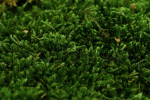
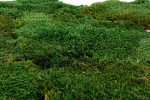
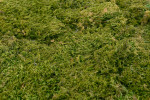
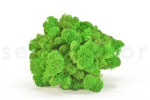
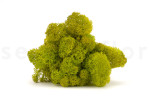
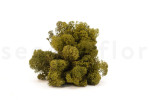
Ideal for permanent setups, preserved moss (pole, flat, or reindeer) acts as an excellent substitute for synthetic bases. Treated with a glycerin-based solution, it retains its soft texture and color without needing water.
Advantages:
- 100% natural, durable, and environmentally sound.
- Perfect for designs requiring raw, nature-inspired elements.
- Strong selling point (CSR alignment) to stand out from competitors.
4. Biodegradable Bases (Paper, Cardboard, Natural Fibers)
Crafted from recycled paper, cardboard, or plant fibers (coconut coir, straw), these moldable bases offer solid support for dried floral arrangements or single-day events. They are easy to shape to fit any container.
Advantages:
- 100% compostable and eco-friendly.
- Cost-effective and versatile.
5. Reusable Vessels and Structures
Rather than hiding a synthetic block, combining glass, ceramic, or metal vessels with natural anchors (pebbles, glass marbles, woven twigs) keeps stems stable while elevating the container itself.
Advantages:
- Infinitely reusable for a zero-waste setup.
- Wide variety of styles, shapes, and decorative integrations.
Comparing Floral Foam Alternatives
- Wreaths, temporary eco-friendly structures
| Mechanic / Material | Ideal Stem Types | Reusable? | Primary Recommended Use |
|---|---|---|---|
| Chicken Wire | All (Fresh, Dried, Artificial, Preserved) | Yes (Unlimited) | Vases, centerpieces, arches, hanging clouds |
| Kenzan (Flower Frog) | All stems | Yes (Unlimited) | Shallow bowls, minimalist designs, Japandi style |
| Preserved Natural Moss | Dried, Artificial, Preserved | Yes (Multi-year) | Moss walls, permanent decor, waterless bases |
| Biodegradable Bases (Straw/Paper) | Dried, Artificial, Single-day events | Compostable |
Preserved Botanicals: Waterless Assembly Made Simple
Historically, floral foam served to hold water for cut flowers. By working with preserved flowers and greenery, you remove the need for water reservoirs altogether.
Paired with straightforward mechanics (reusable netting, preserved moss, natural straw), preserved botanicals allow you to design reusable installations from event to event without creating plastic waste.
In Summary: Adopting Sustainable Floral Mechanics
Transitioning away from synthetic floral foam requires a small technical adjustment, but yields significant returns: lower long-term supply costs through reusable tools, a stronger brand position with eco-conscious clients, and a healthier work environment daily.