

 fr
fr
 es
es
 de
de
 it
it


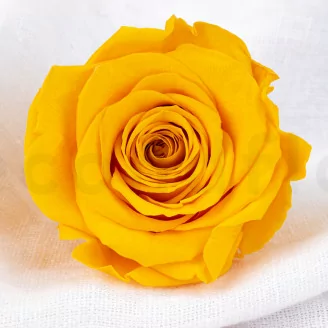
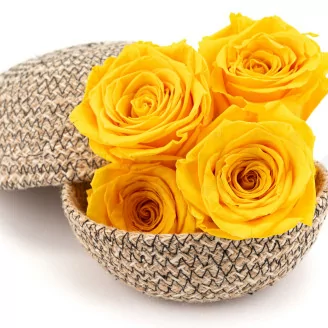
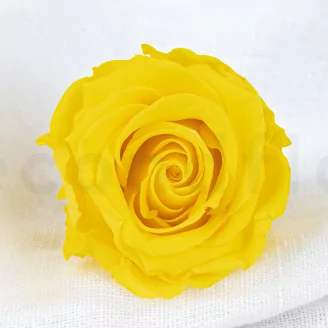
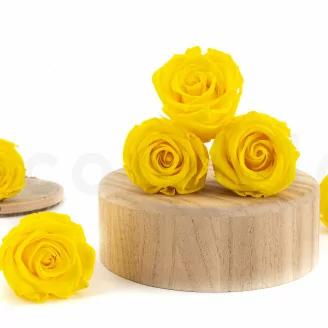
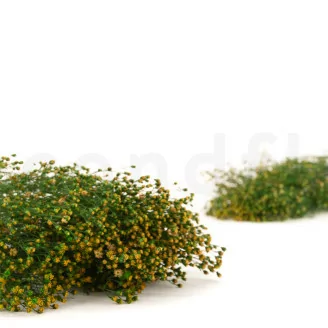
This is solely to reflect the product’s true appearance as accurately as possible.
Color rendering may also vary from one screen to another.
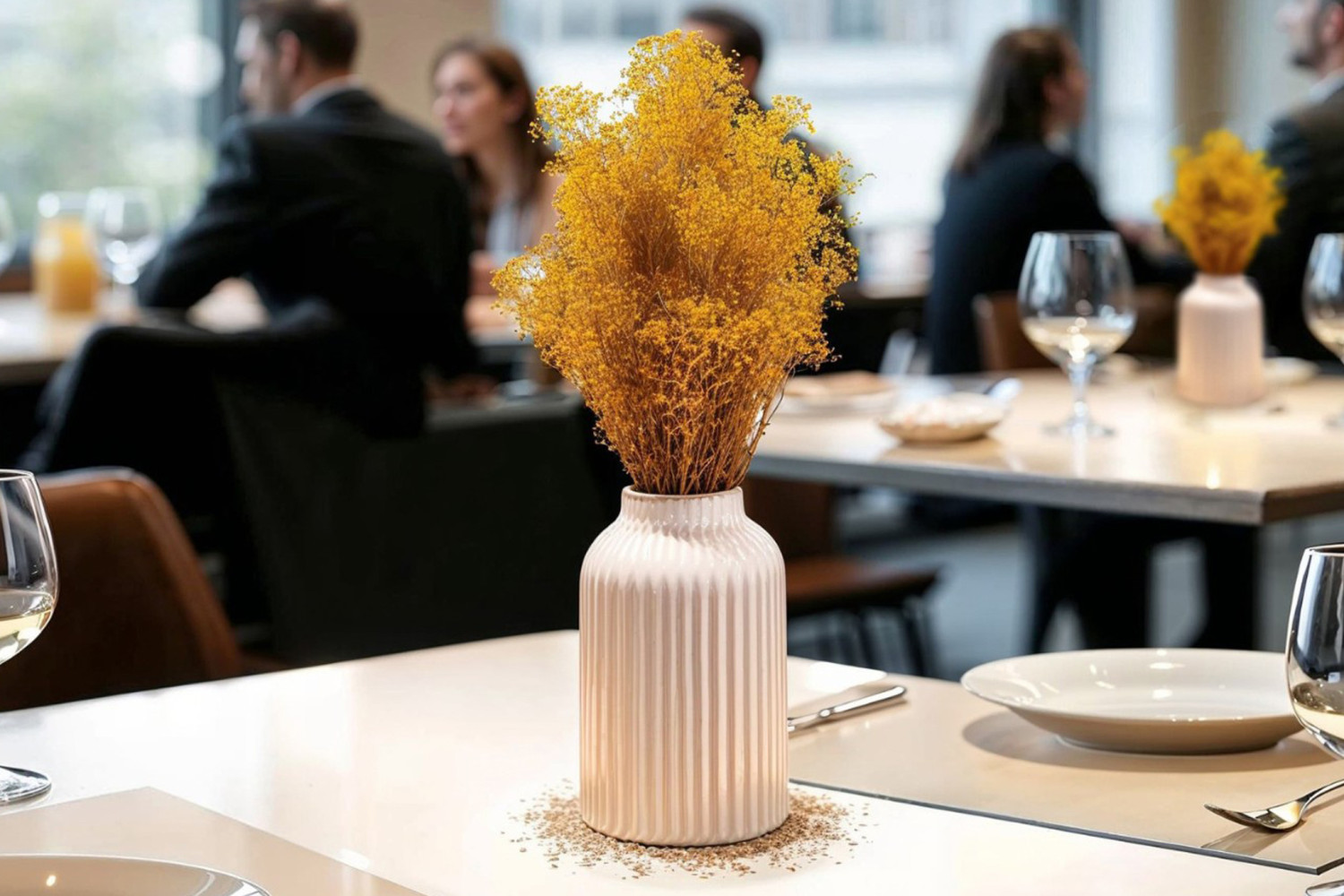
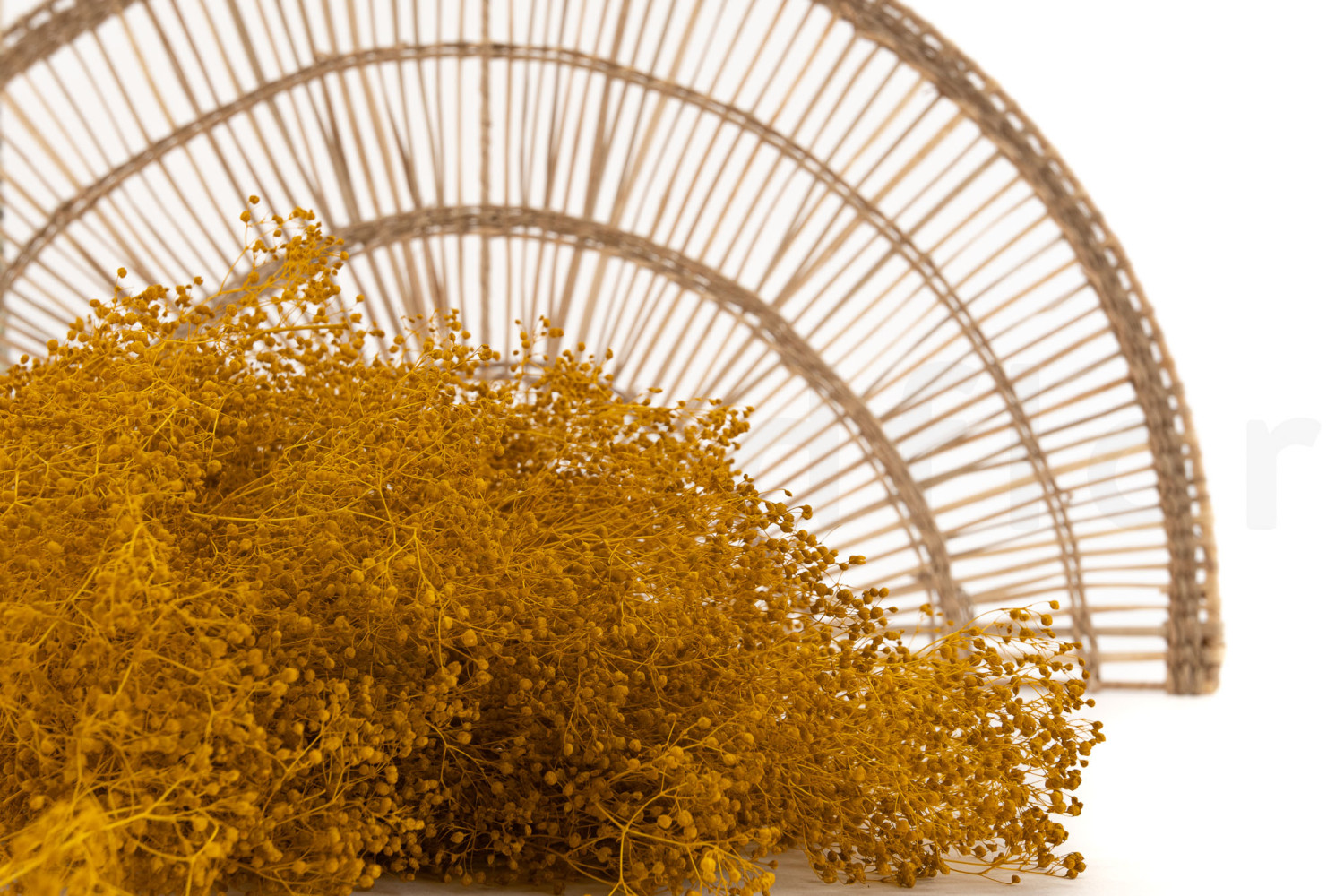
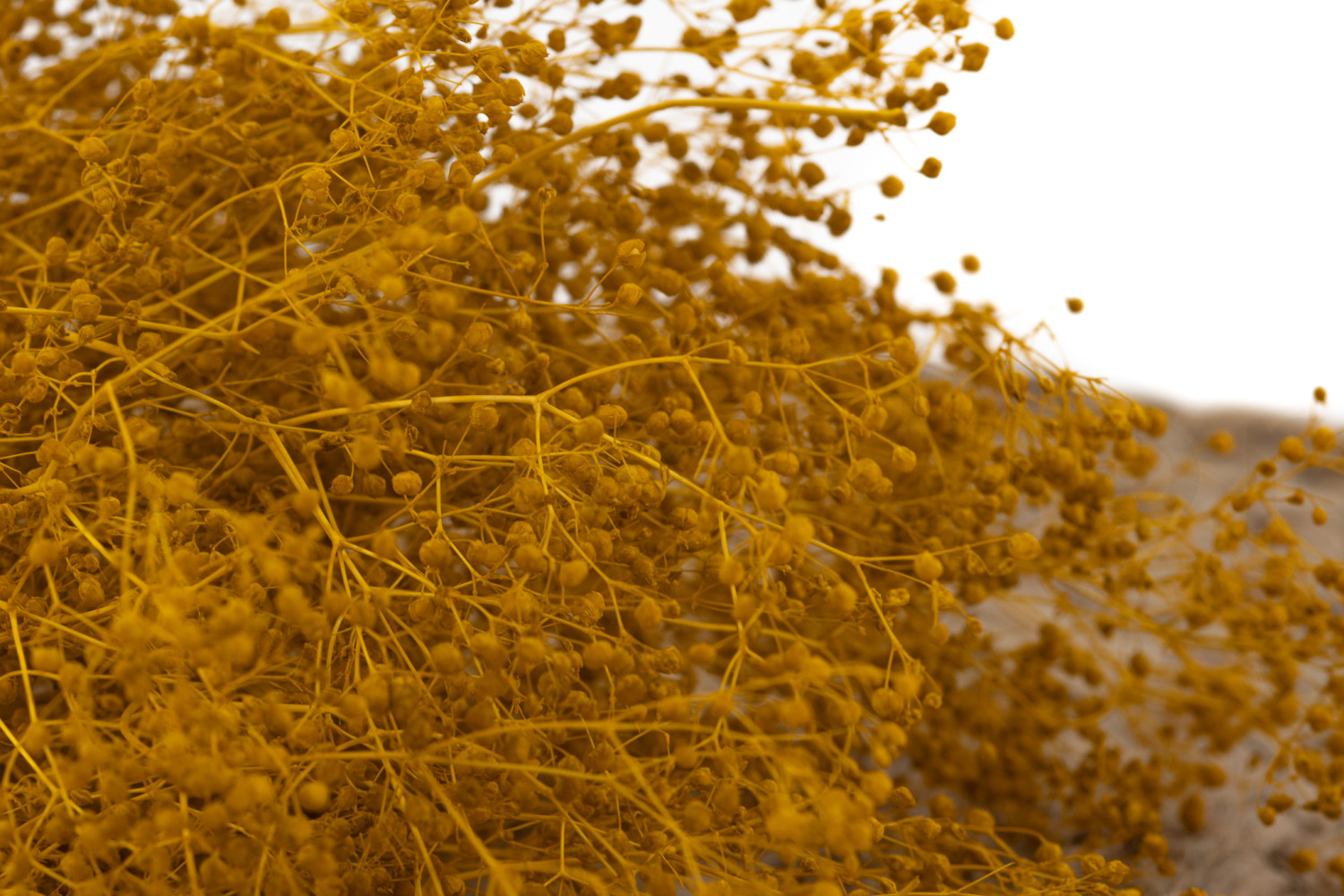
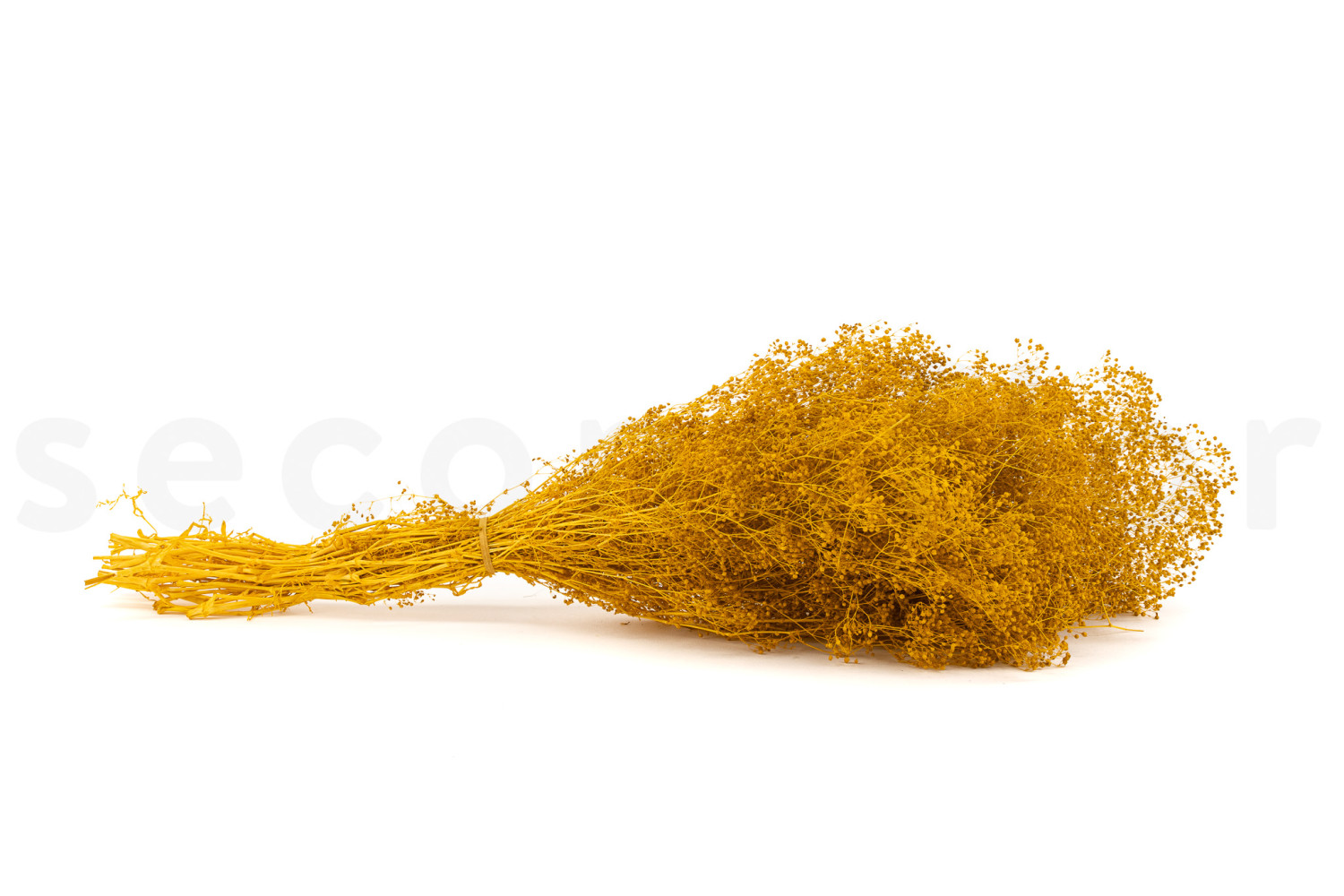
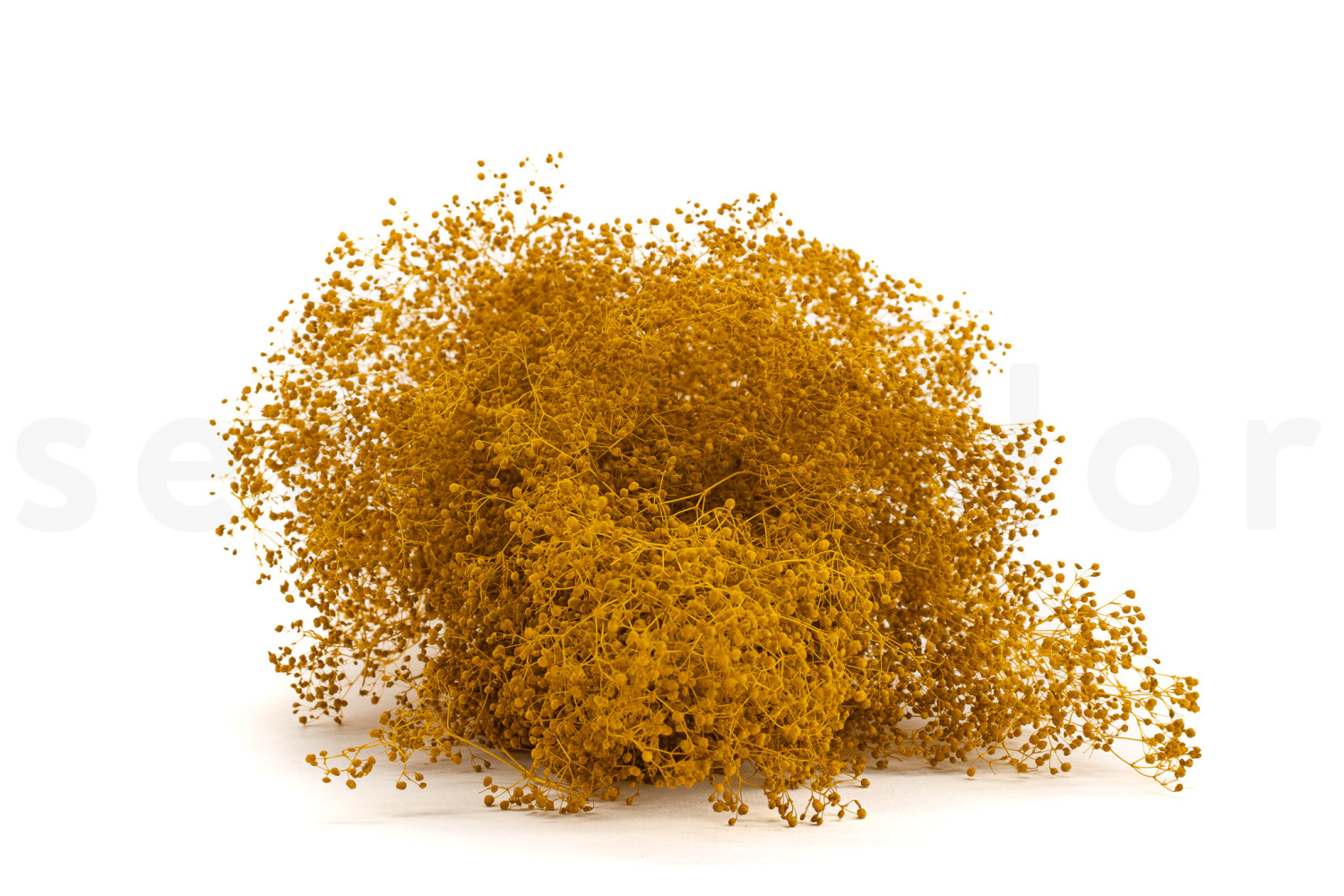
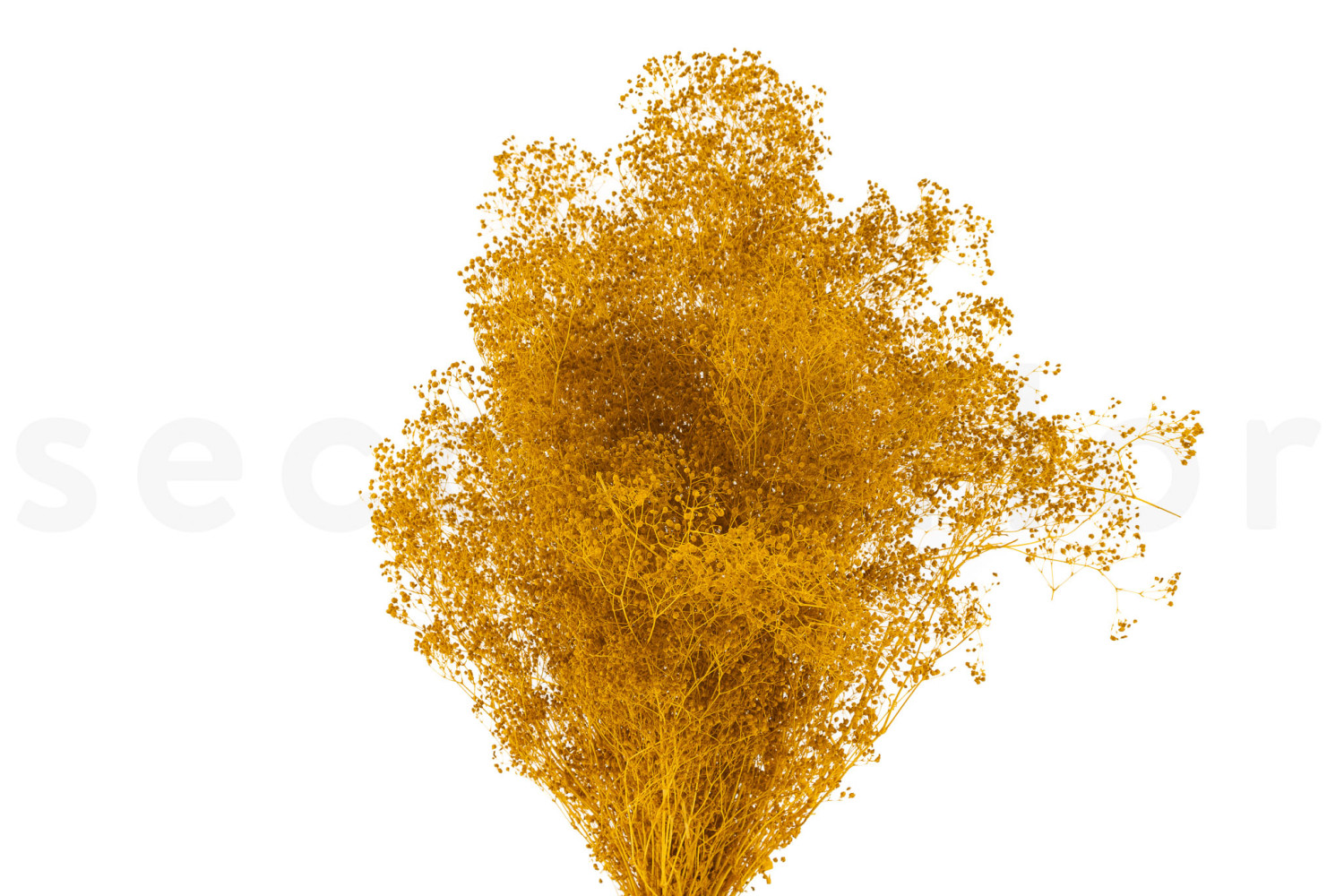
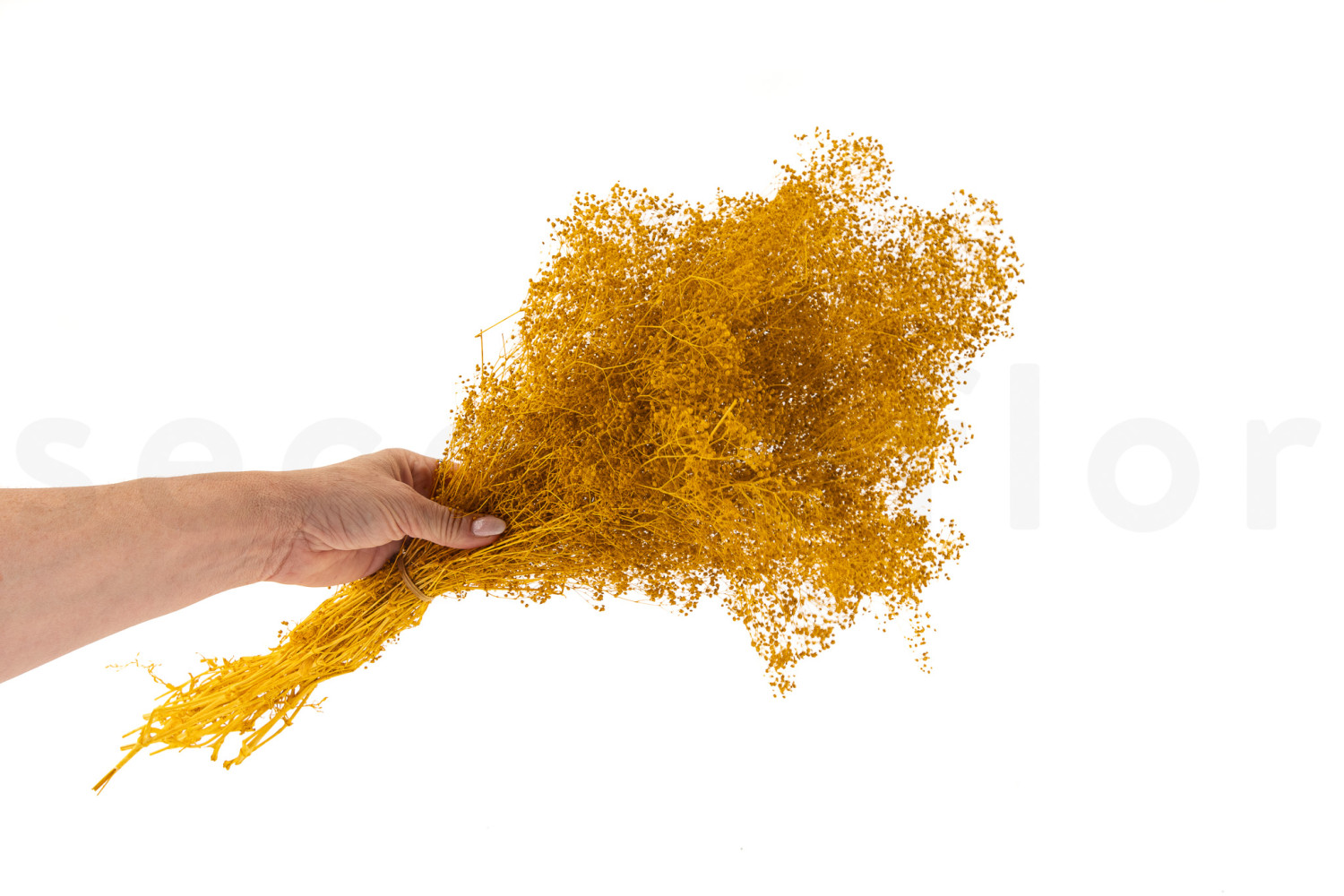
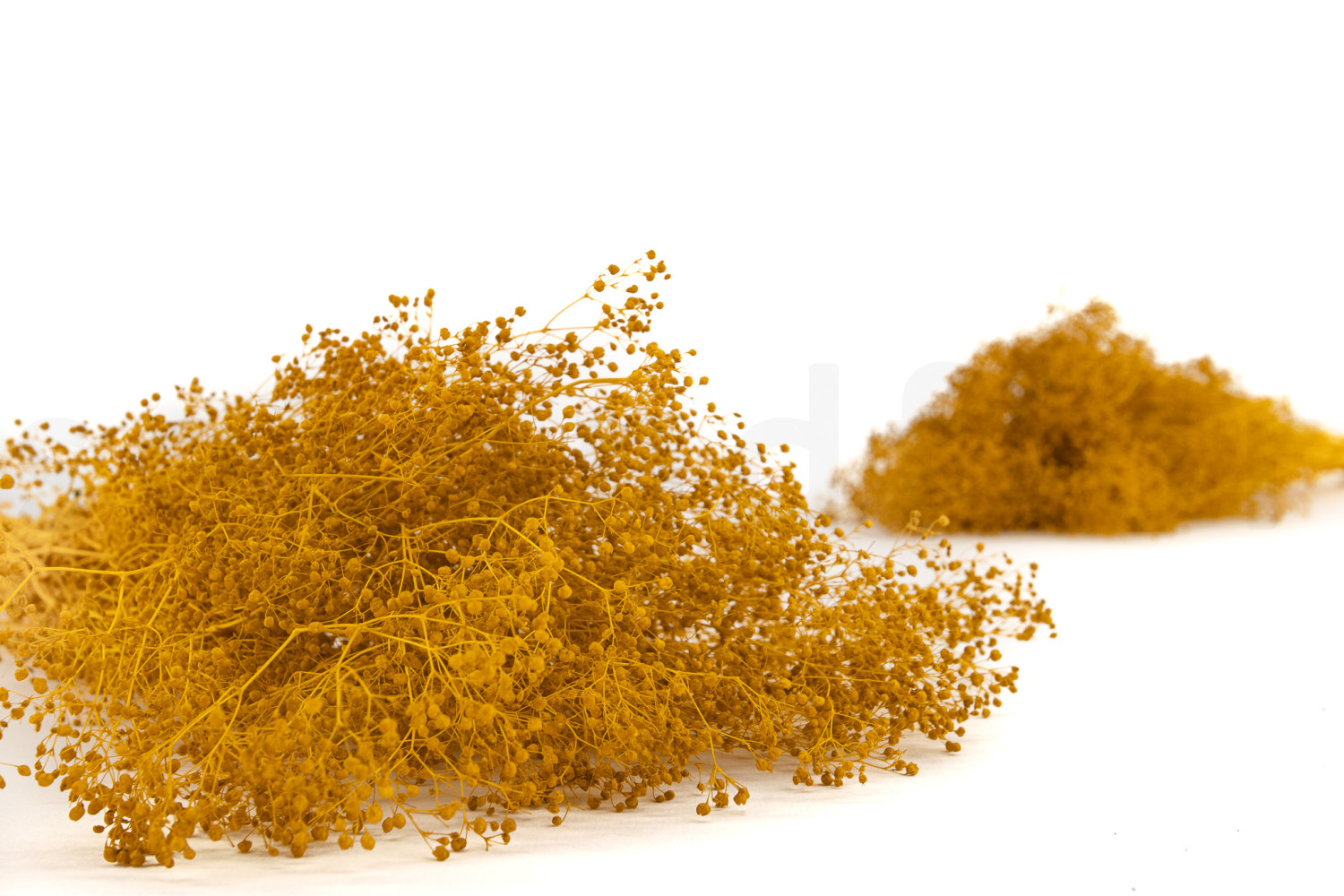
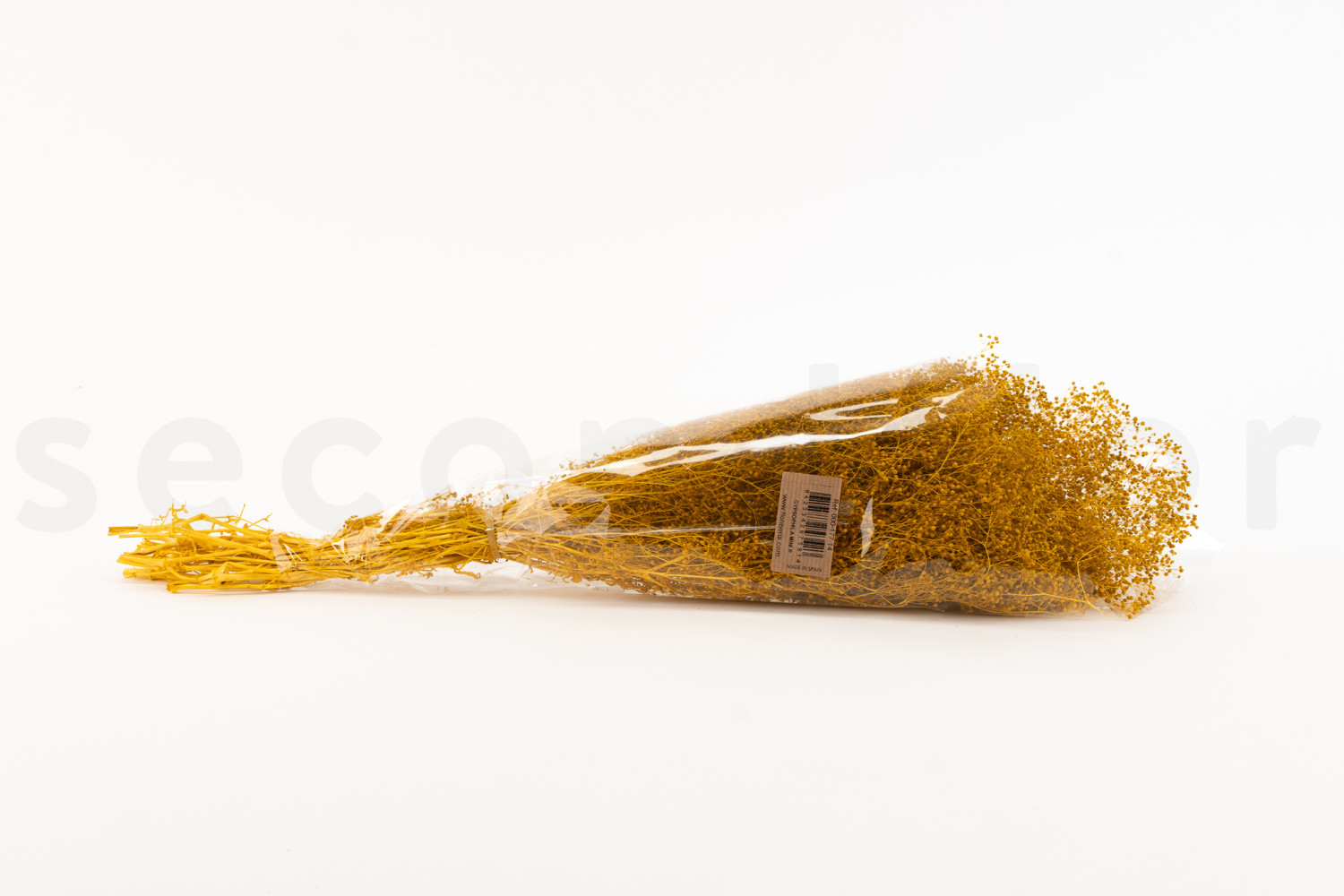

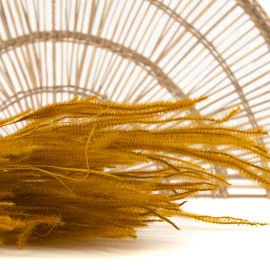
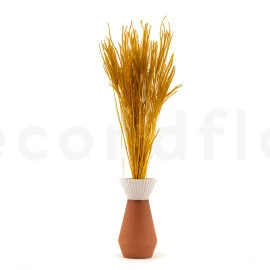
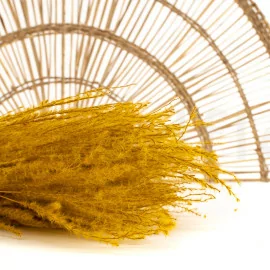
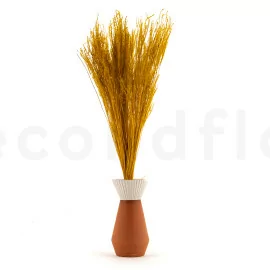
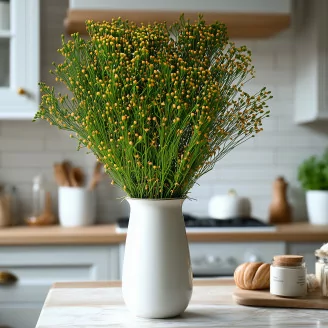
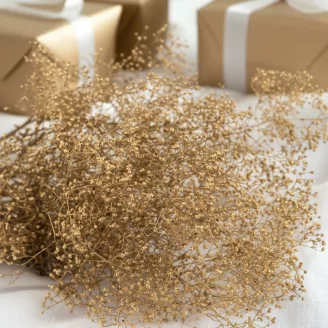
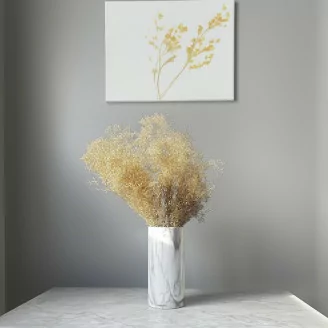
Mini Gypsophila Preserved - Honey Yellow
Dimensions: L 40-50 cm (non-contractual indicative values)
Packaging: Bouquet
Preservation technique: Double immersion preservation (More info)
-
Variable density and flower size
-
Some parts may be broken
Generalities: Preserved flowers are natural. Variations in sizes, shapes and colours can exist between elements of the same reference. Some parts may present slight defects (slightly split petals, damaged sepals...).
Humidity: Do not place it in contact with another flower or a light-coloured porous material to avoid colour transfer, especially in a very humid environment. Darker colours are more likely to transfer.
Light & heat exposure: The flower exposed to the sun for extended periods of time may discolour - Exposed to heat, it dries out.
Evolution over time: Over time, flowers tend to wither and fade more or less. Dark colours discolour more than light ones.
Flower's colour: Food colouring (non-toxic)
Origin and processing
Gypsophila is native to Europe, Asia and North Africa. This herbaceous plant is appreciated for its small, delicate flowers and airy foliage. In its mini preserved version, gypsophila undergoes a delicate preservation process that maintains its natural appearance while extending its lifespan.
Adaptability and versatility
Thanks to its preserved nature, gypsophila offers exceptional durability, allowing it to retain its beauty and freshness for long periods without requiring any special maintenance. This makes it an ideal choice for floral arrangements for special events such as weddings, birthdays or receptions. What's more, its versatility means it fits perfectly into a variety of decorative styles, whether modern, bohemian or classic.
An entire range in Honey Yellow
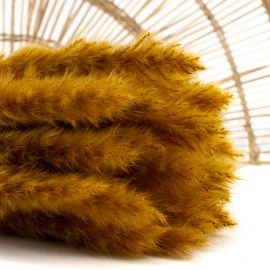
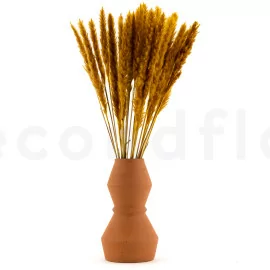
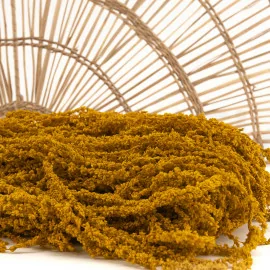
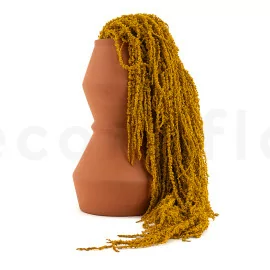
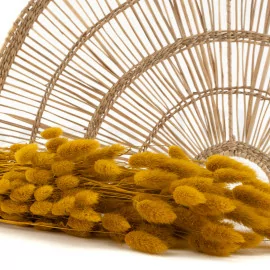
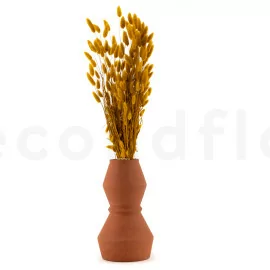
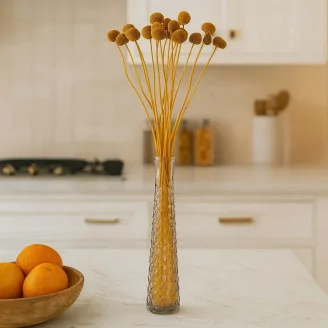
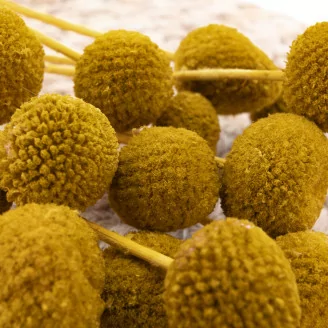
To create perfectly matched floral arrangements, opt for Gypsophila Mini Preserved in Honey Yellow. You'll then be able to enjoy a varied selection of plants preserved in the same shade, such as dried Fine Grass, dried Ouro, preserved Craspedia, dried Lagurus Ovatus and preserved Amaranth. Each of these plants offers distinct textures and shapes, allowing you to play with volumes and accentuate contrasts to create dynamic, visually striking floral arrangements.